My Take on AI Energy Consumption
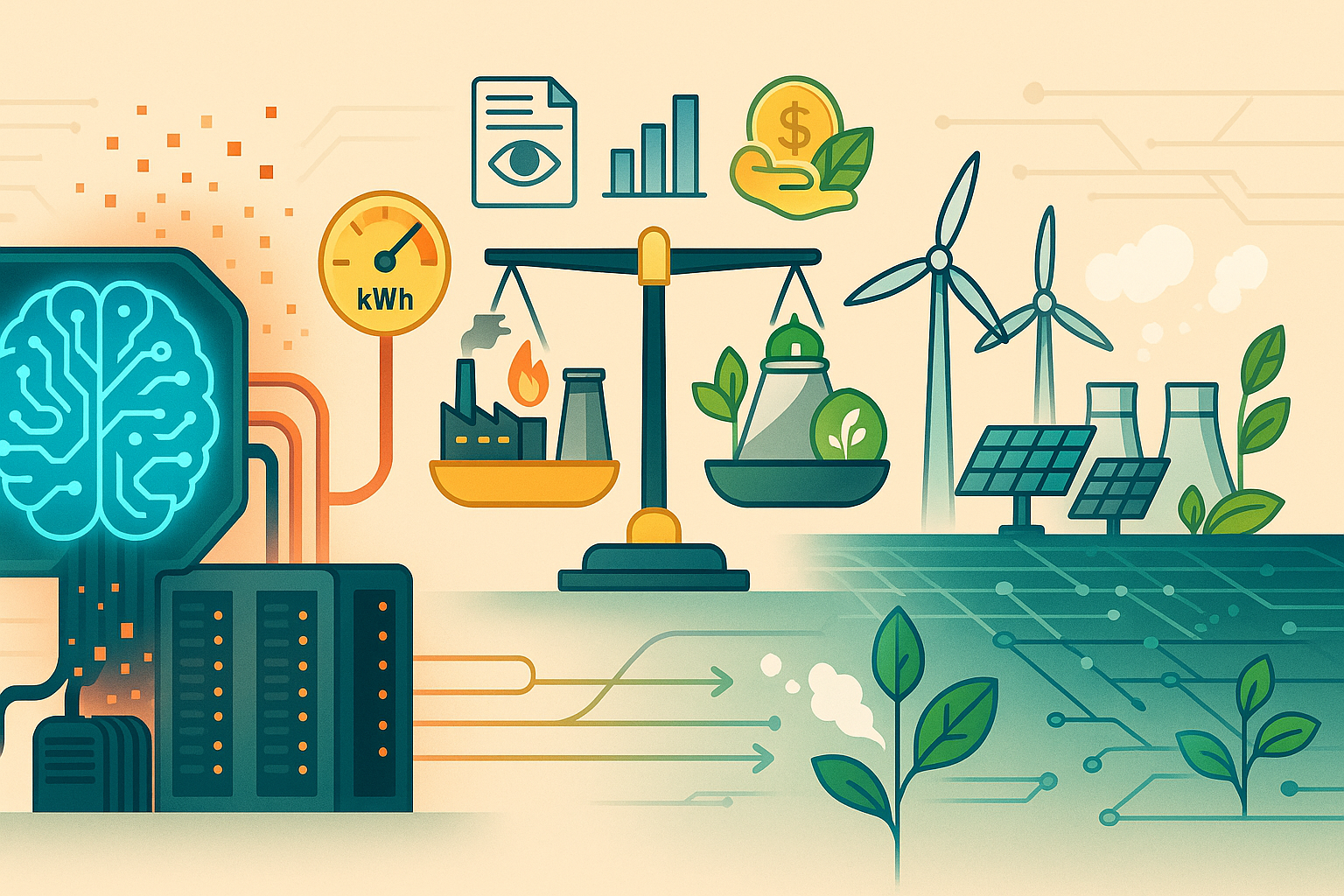
I recently encountered Sasha Luccioni's Financial Times piece on AI energy consumption, and felt compelled to engage with her arguments. As someone who has been following developments within AI and the energy sector closely, I found her article particularly thought provoking.
1. Transperency
greater clarity is needed. OpenAI, Anthropic and other tech companies should start disclosing the energy consumption of their models. If they resist, then we need legislation that would make such disclosures mandatory.
I appreciate Luccioni's push for transparency in environmental impact. Her take offers a refreshing perspective in a field dominated by those that either champion all out development or staunch believers in alignment. With 3% of global emissions coming from datacenters, the environmental impacts of the AI revolution cannot be ignored.
In line with her arguments, I believe it is critical to push for companies to be more transparent about the costs and externalities of training and using AI models. Not only is disclosure of energy consumption a good way to reduce the information asymmetry between producers and users, it also provides companies a robust way to signal powess to markets. The market movements caused by DeepSeek’s announcements last winter demonstrated this effect.
Nevertheless, I am skeptical on her push for more legislation. I believe that regulation - no matter how meticulously written - will either stiffle development or will fall flat in its ability of bringing the worst perpetrators to justice.
As a side note: I also find Hyman’s response letter to be overly extremist in its attempt to internalize all environmental costs. Basic economic theory would suggest his dream of a first best solution is unlikely to materialize. On the other hand, market driven approaches that are emerging seem to be relatively promising. Microsoft’s investment into Three Mile Island, and Amazons investments into Small Modular Reactors show promise. As Lucchioni said, tech companies already drove 92% of U.S. clean energy purchases in 2024.
2. AI as a solution
It is possible that AI models will one day help in the fight against climate change. AI systems pioneered by companies like DeepMind are already designing next-generation solar panels and battery materials, optimising power grid distribution and reducing the carbon intensity of cement production.
With regards to Luccioni’s take on AI in tackling sustainability concerns, I find her viewpoint to be slightly too pessimistic.
As AI is a ubiqutous disruptor, I fail to see how it would not be able to revolutionize our understanding of energy systems. Enabling new generation energy systems and optimizing legacy systems would upend our view of the environemntal impacts of AI. Nevertheless, I understand the crux of Luccioni’s argument; if irreparable damage is done our planet in the conquest for AGI, any future solutions might be futile.
3. Behavioural
Knowing this might make them more careful about using AI for superfluous tasks like looking up a nation’s capital. Increased transparency would also be an incentive for companies developing AI-powered services to select smaller, more sustainable models that meet their specific needs, rather than defaulting to the largest, most energy-intensive options.
Another qualm that I have with her piece is her steadfast belief in the willingness of AI users to alter their behaviours. Luccioni suggests informed users might be "more careful" with AI queries. However, this contradicts a prevailing trend I have noticed – convenience trumps everything. Humans are inherently driven to the path of least friction and I do not believe users will be willing to make alterations in their behaviour for a “greater good.”
Rather than relying on the goodness of people, we should rely on market mechanisms to drive choices. Transparency will make the markets more efficient for the benefit of customers, producers and others stakeholders alike.
4. Conclusions
In sum, Luccioni deserves credit for putting a spotlight on the acute question of the environmental impacts of AI. Nevertheless, I feel we must move past a "AI vs. the environment" framing towards an appreciation AI's dual nature. The path forward requires increased transparency, leveraging AI as a solution, as well as reliance on market incentives. Ultimately, success hinges on recognizing that progress and sustainability are not opposing forces, but rather interdependent factors.